
Weather is the state of the atmosphere, describing for example the degree to which it is hot or cold, wet or dry, calm or stormy, clear or cloudy.On Earth, most weather phenomena occur in the lowest level of the planet’s atmosphere, the troposphere,just below the stratosphere. Weather refers to day-to-day temperature and precipitation activity, whereas climate is the term for the averaging of atmospheric conditions over longer periods of time.When used without qualification, “weather” is generally understood to mean the weather of Earth.
Weather is driven by air pressure, temperature, and moisture differences between one place and another. These differences can occur due to the Sun’s angle at any particular spot, which varies with latitude. The strong temperature contrast between polar and tropical air gives rise to the largest scale atmospheric circulations: the Hadley cell, the Ferrel cell, the polar cell, and the jet stream. Weather systems in the middle latitudes, such as extratropical cyclones, are caused by instabilities of the jet streamflow. Because Earth’s axis is tilted relative to its orbital plane (called the ecliptic), sunlight is incident at different angles at different times of the year. On Earth’s surface, temperatures usually range ±40 °C (−40 °F to 100 °F) annually. Over thousands of years, changes in Earth’s orbit can affect the amount and distribution of solar energy received by Earth, thus influencing long-term climate and global climate change.
Surface temperature differences in turn cause pressure differences. Higher altitudes are cooler than lower altitudes, as most atmospheric heating is due to contact with the Earth’s surface while radiative losses to space are mostly constant. Weather forecasting is the application of science and technology to predict the state of the atmosphere for a future time and a given location. Earth’s weather system is a chaotic system; as a result, small changes to one part of the system can grow to have large effects on the system as a whole. Human attempts to control the weather have occurred throughout history, and there is evidence that human activities such as agriculture and industry have modified weather patterns
Sea Breeze
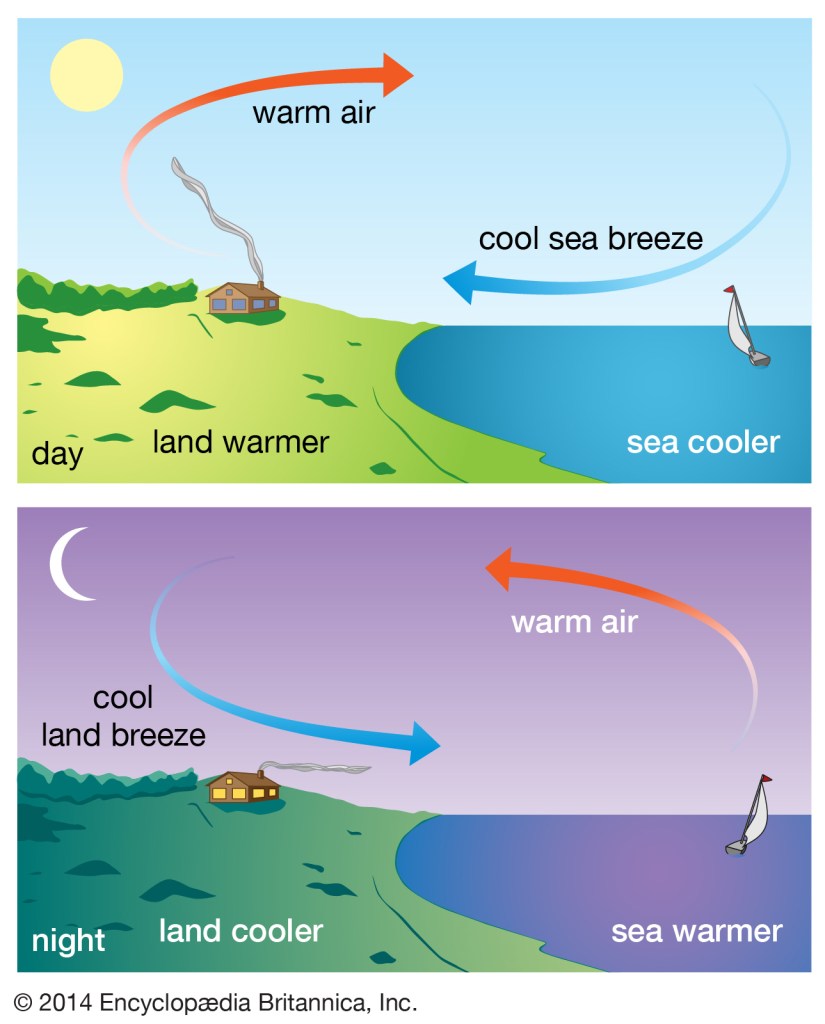
A sea breeze or onshore breeze is any wind that blows from a large body of water toward or onto a landmass; it develops due to differences in air pressure created by the differing heat capacities of water and dry land. As such, sea breezes are more localised than prevailing winds.
Land Breeze
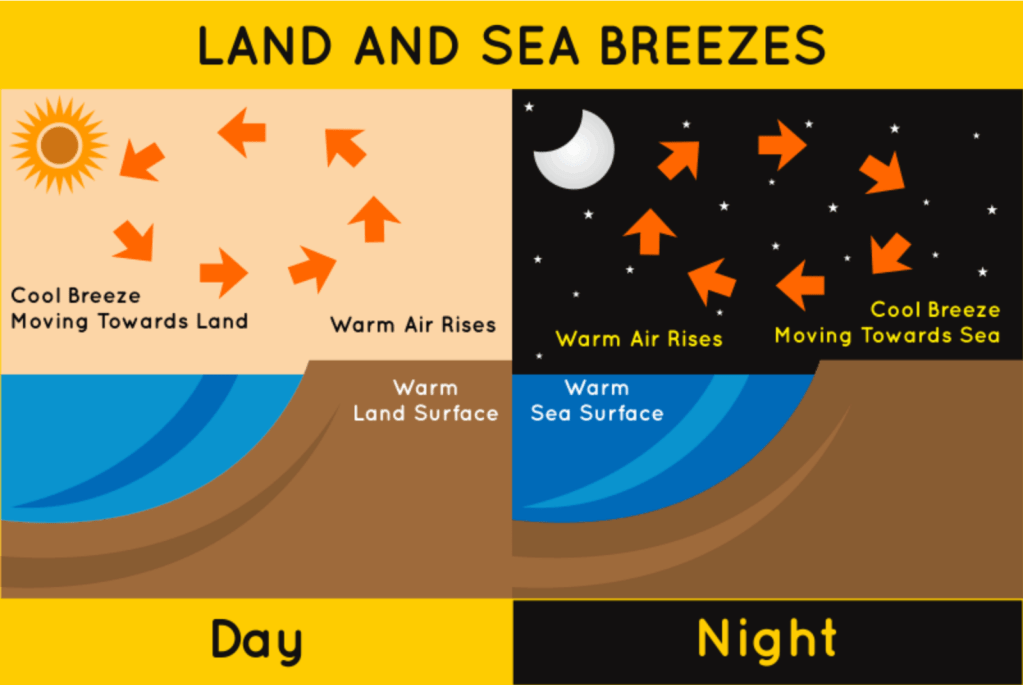
Land breeze, a local wind system characterized by a flow from land to water late at night. … The land breeze is typically shallower than the sea breeze since the cooling of the atmosphere over land is confined to a shallower layer at night than the heating of the air during the day.
MONSOON
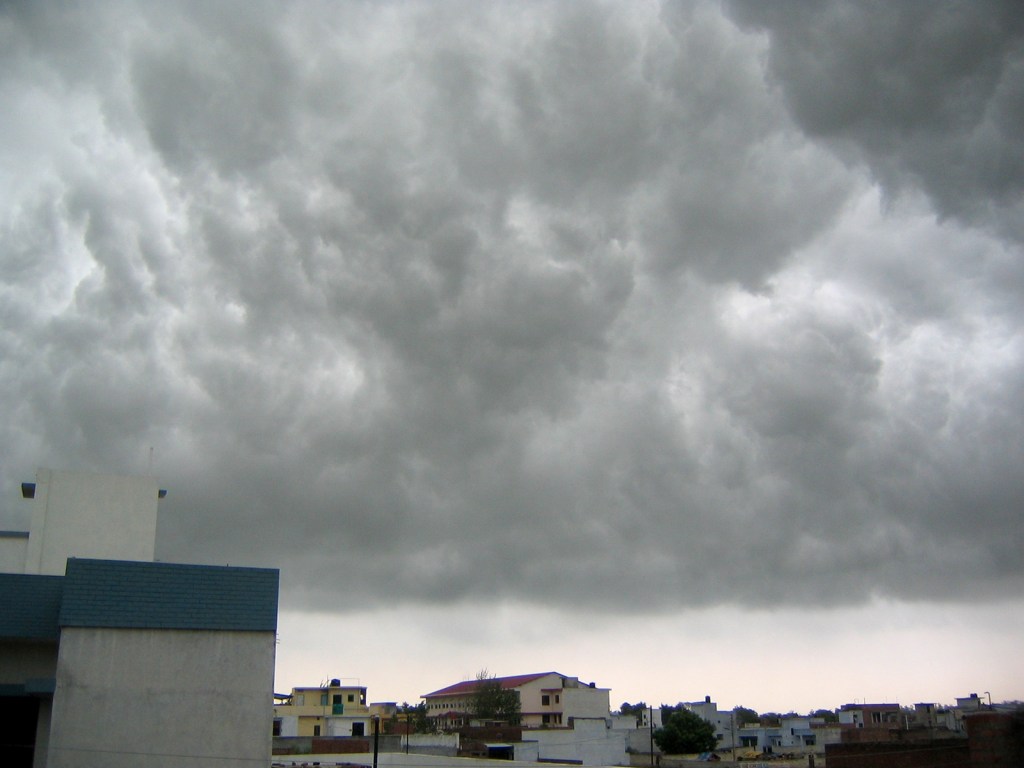
It usually happens between April and September. As winter ends, warm, moist air from the southwest Indian Ocean blows toward countries like India, Sri Lanka, Bangladesh, and Myanmar. The summer monsoon brings a humid climate and torrential rainfall to these areas. India and Southeast Asia depend on the summer monsoon
Monsoon, a major wind system that seasonally reverses its direction—such as one that blows for approximately six months from the northeast and six months from the southwest. The most prominent monsoons occur in South Asia, Africa, Australia, and the Pacific coast of Central America.
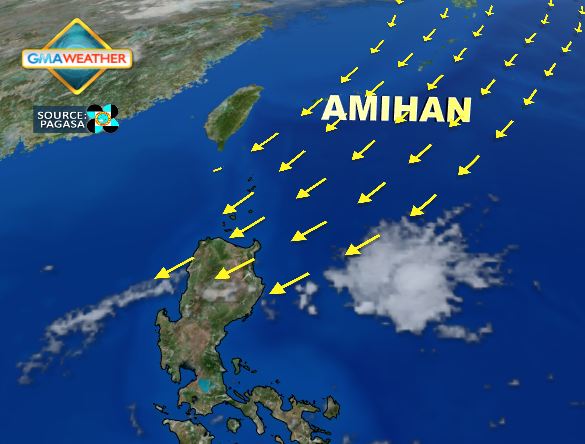
Here in the Philippines,Amihan is the Northeast Monsoon
Amihan is the Filipino term of Northeast monsoon, which is a cool and dry northeast wind coming from Siberia and China and blows down to Southeast Asia. … The monsoon commonly occurs from October to late March, although occurrence may every year.

Throughout the rest of the year, the Philippines experiences the west or southwest wind; south west monsoon, which in turn is referred to as the Habagat. The habagat season is characterized by hot and humid weather, frequent heavy rainfall, and a prevailing wind from the western parts.
Intertropical convergence zone
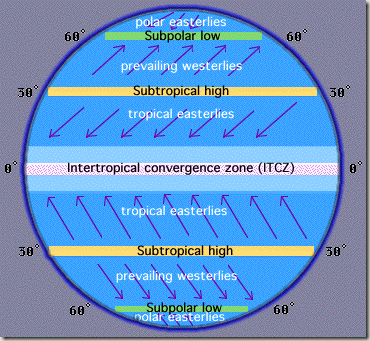
The Intertropical Convergence Zone (ITCZ, pronounced “itch”), known by sailors as the doldrums or the calms because of its monotonous windless weather, is the area where the northeast and the southeast trade winds converge. It encircles Earth near the thermal equator though its specific position varies seasonally.The intense sun and warm water of the equator heats the air in the ITCZ, raising its humidity and making it buoyant.
Intertropical Convergence Zone play important role in the global circulation system and also known as the Equatorial Convergence Zone or Intertropical Front. It is a basically low pressure belt encircling Earth near the Equator. It is a zone of convergence where the trade winds meet.The ITCZ is a very large feature which circles the globe. It affects many tropical areas around the world including territories in the southern Caribbean. The ITCZ is not stationary. It moves north of the equator during the northern hemisphere summer, bringing heavy rain to Trinidad and Tobago and Grenada.
Polar Westerlies
In the study of Earth’s atmosphere, polar easterlies are the dry, cold prevailing winds that blow around the high-pressure areas of the polar highs at the North and South Poles. … The polar easterlies are one of the five primary wind zones, known as wind belts, that make up our atmosphere’s circulatory system.
Prevailing westerlies
prevailing westerlies, are prevailing winds from the west toward the east in the middle latitudes between 30 and 60 degrees latitude. They originate from the high-pressure areas in the horse and trend towards the poles and steer extratropical cyclones in this general manner.
Tropical Easterlies
(Also called subtropical easterlies.) A term applied to the trade winds when they are shallow and exhibit a strong vertical shear.
With this structure, the easterlies give way at about 1.5 km to the upper westerlies (antitrades), which are sufficiently strong and deep to determine cloudiness and weather. The tropical easterlies occupy the poleward margin of the Tropics in summer and can cover most of the tropical belt in winter.
Compare equatorial easterlies.
Subpolar low
A band of low pressure located, in the mean, between 50° and 70° latitude. In the Northern Hemisphere, this belt consists of the Aleutian low and the Icelandic low. In the Southern Hemisphere, it is supposed to exist around the periphery of the Antarctic continent
The travelling cyclonecyclones of subpolar latitudelatitudes usually reachreach maximummaximum intensity in the area of the Aleutian low. The Aleutian low and its counterpart in the Atlantic Ocean,the Icelandic low, compose the Northern Hemisphere pressure belt pressure.
Subtropical high
Subtropical high, one of several regions of semipermanent high atmospheric pressure located over the oceans between 20° and 40° of latitude in both the Northern and Southern hemispheres of the Earth. … In both hemispheres, subsidence is greater on the eastern sides of the highs.
Ask the air moves towards the subtropics, it descends over the oceans and creates semi-permanent circulation features called subtropical highs. In the Northern Hemisphere, these high pressure systems are located over the North Pacific and North Atlantic oceans.

 Site Title
omg
LikeLike